Blog

  • Smart Tactics to Reduce Cloud Waste at Your Business

    Smart Tactics to Reduce Cloud Waste at Your Business

    Cloud computing has revolutionized the way businesses operate. It offers scalability, flexibility, and cost-efficiency. But cloud services also come with a downside: cloud waste.

    Cloud waste is the unnecessary spending of resources and money on cloud services. These services are often not fully utilized or optimized. About 32% of cloud spending is wasted. This can lead to budget concerns as spending
    skyrockets.

    But that figure also holds opportunity. It means that you can reduce nearly a third of cloud spending by optimizing how you use cloud tools.

    So, how can you reduce cloud waste at your business and save money? Here are some smart tactics to consider.

    Conduct a Comprehensive Cloud Audit

    Before implementing any cost-cutting strategies, conduct an audit. It’s essential to have a clear understanding of your current cloud usage. Conducting a comprehensive cloud audit allows you to identify:

    • Underutilized resources
    • Overprovisioned instances
    • Unnecessary services

    Use cloud management tools to generate reports. Look at usage patterns, costs, and performance metrics. This initial assessment forms the foundation for implementing effective waste reduction tactics.

    Put in Place Right-Sizing Strategies

    Right-sizing involves matching your cloud resources to the actual demands of your workloads. Many businesses fall into the trap of overprovisioning. This means securing more user licenses or features than they need. This leads to increased costs and unnecessary waste.

    Analyze your workload requirements and resize instances accordingly. Use tools provided by your cloud service provider. These tools can identify and adjust the capacity of instances. This ensures that you only pay for the resources you truly need.

    Use Reserved Instances and Savings Plans

    Cloud providers offer cost-saving options like Reserved Instances (RIs) and Savings Plans. These allow businesses to commit to a specific amount of usage. This is in exchange for discounted rates. By leveraging these options, you can significantly reduce your cloud costs over time.

    Carefully analyze your workload and usage patterns. Then, determine the most cost-effective reserved capacity or savings plan. Find a plan that aligns with your business’s long-term goals.

    Install Automated Scaling Policies

    Dynamic workloads have a need for dynamic resource allocation. Install automated scaling policies. These ensure that your infrastructure scales up or down based on demand. This optimizes performance. It also prevents overprovisioning during periods of low activity.

    Cloud services enable you to set predefined policies for scaling. Examples are AWS Auto Scaling and Autoscale in Azure. These features help ensure efficient resource utilization without manual intervention.

    Track and Optimize Storage

    Storage costs can accumulate quickly. This is especially true when data is not regularly reviewed and archived. Estimate your storage needs. Then, put in place lifecycle policies to automatically downsize lesser-used data such as transitioning less frequently accessed data to lower-cost storage options.

    Regularly review and delete unnecessary data to free up storage space. Adopt a proactive approach to storage management. This can help you significantly reduce costs associated with data storage.

    Schedule Your Cloud Resources

    Schedule your cloud resources to run only when you need them. For example, turn off development, testing, or staging environments during nights and weekends. Or scale down your production environment during off-peak hours.

    Use available tools to automate the scheduling of your cloud resources. Base this on automated rules and policies that you define.

    Delete Unused or Orphaned Cloud Resources

    Sometimes, you may forget or neglect to delete cloud resources. Resources that you no longer need or use. This can include:

    • Snapshots
    • Backups
    • Volumes
    • Load balancers
    • IP addresses
    • Unused accounts

    These resources can accumulate over time and incur unnecessary costs. To avoid this, you should regularly audit your cloud environment. Delete any unused or orphaned resources your business is not using. You can often use cloud provider tools to find and remove these.

    Weed Out Duplicate Services

    Different departments in the same organization may be using duplicate services. Marketing may use one task management app, while Sales uses a different one. Centralize cloud resources and remove duplicate tools.

    Having everyone use the same cloud tool for the same function can save money as well as enhance collaboration, reporting, and data integration.

    Embrace Serverless Architecture

    Serverless computing allows businesses to run applications without managing the underlying infrastructure. You pay only for the actual compute resources used for your processes. This eliminates the need for provisioning and maintaining servers. Which reduces both operational complexity and costs. Consider migrating suitable workloads to a serverless model. This can help you optimize resource use and cut cloud waste.

    Schedule a Cloud Optimization Assessment Today!

    By following these smart tactics, you can reduce cloud waste at your business as well as optimize your cloud spending. This helps you save money. You can also improve operational efficiency and environmental sustainability.

    Are you struggling with expanding cloud costs? Need help identifying and removing cloud waste? Our team of cloud experts can help you.

    Contact us today to schedule your assessment.

    —
    Featured Image Credit

    This Article has been Republished with Permission from The Technology Press.

  • Eye-opening Insights from the 2023 Annual Cybersecurity Attitudes and Behaviors Report

    Eye-opening Insights from the 2023 Annual Cybersecurity Attitudes and Behaviors Report

    We are living in an era dominated by digital connectivity. You can’t overstate the importance of cybersecurity. As technology advances, so do the threats that lurk in the online world.

    Often, it’s our own actions that leave us most at risk of a cyberattack or online scam. Risky behaviors include weak passwords and lax security policies. As well as thinking “This won’t happen to me.” This is why human error is the cause of approximately 88% of data breaches.

    The National Cybersecurity Alliance and CybSafe are working to correct poor cyber hygiene. Each year, the duo publishes a report on cybersecurity attitudes and behaviors. The goal is to educate both people and businesses. To educate them on how to better secure their digital landscapes.

    This year’s study surveyed over 6,000 people across the U.S., Canada, the U.K., Germany, France, and New Zealand. The survey asked about several things. These include knowledge of cybersecurity risks, security best practices, and challenges faced.

    The report reveals some eye-opening insights. These include how people perceive and respond to cyber threats. As well as what they can do to improve their cybersecurity posture. Here are some of the key findings from the report.

    We Are Online… a Lot

    It’s no surprise that 93% of the study participants are online daily. The logins we create continue to expand, as well as those considered “sensitive.” Sensitive accounts hold personal information that could be harmful if stolen.

    Nearly half (47%) of the study’s respondents have ten or more sensitive online accounts. This amplifies risk. Especially if people are using the same password for two or more of those accounts.

    The Annual Cybersecurity Attitudes and Behaviors Report 2023
    Source: The Annual Cybersecurity Attitudes and Behaviors Report 2023

    Online Security Makes People Frustrated

    Most people (84%) feel that online security is a priority. But as many as 39% feel frustrated, and nearly the same amount intimidated. It can seem that you just can’t get ahead of the hackers. Just over half of people thought digital security was under their control. That leaves a whole lot that don’t think so.

    But that is no reason to let down your defenses and become an easy target. There are best practices you can put in place to safeguard your online accounts that work.

    These include:

    • Enabling multi-factor authentication on your accounts
    • Using an email spam filter to catch phishing emails
    • Adding a DNS filter to block malicious websites
    • Using strong password best practices

    People Need More Access to Cybersecurity Training

    One way to reduce human errors associated with cybersecurity is to train people. The survey found that just 26% of respondents had access to cybersecurity training.

    It also broke this down by employment status. We see that those not actively employed are most lacking. Even those employed can use more training access and encouragement. Just 53% report having access to cybersecurity awareness training and using it.

    Source: The Annual Cybersecurity Attitudes and Behaviors Report 2023

    Employers can significantly reduce their risk of falling victim to a data breach. They can do this by beefing up their security awareness training. There is also a large opportunity to provide more training. Particularly to those retired or not actively employed.

    Cybercrime Reporting Is Increasing

    Over a quarter (27%) of survey participants said they had been a victim of cybercrime.

    The types of cybercrimes reported include:

    • Phishing (47%)
    • Online dating scams (27%)
    • Identity theft (26%)

    Which generation reported the most cybercrime incidents? Millennials. In fact, Baby Boomers and the Silent Generation reported the fewest.

    Cybercrime incidents by generations
    Source: The Annual Cybersecurity Attitudes and Behaviors Report 2023

    No matter where you fall in the generations, it’s important to adopt security best
    practices. We’ll go through some of these next.

    Online Security Best Practices to Reduce Your Risk

    1. Strong, Unique Passwords:
      • Start with the basics. Create strong, unique passwords for each online account.
      • Use a combination of uppercase and lowercase letters, numbers, and special characters.
    2. Multi-Factor Authentication (MFA):
      • Enhance your account security with multi-factor authentication.
      • MFA adds an extra barrier to unauthorized access. Even for
        compromised passwords.
    3. Regular Software Updates:
      • Keep all your software, including operating systems and mobile
        apps, up to date.
    4. Beware of Phishing Attacks:
      • Exercise caution when clicking on links or opening attachments
        especially in emails from unknown sources.
      • Verify the legitimacy of emails and websites. Check for subtle
        signs, such as misspelled URLs or unfamiliar sender addresses.
    5. Use Secure Wi-Fi Networks:
      • Ensure you connect to a secure and password-protected Wi-Fi
        network.
      • Avoid using public Wi-Fi for sensitive transactions. Unless using a virtual private network (VPN).
    6. Data Backup:
      • Regularly back up important data to an external device or a secure
        cloud service.
    7. Use Antivirus and Anti-Malware Software:
      • Install reputable antivirus and anti-malware software on all devices.
      • Regularly scan your systems for potential threats.
    8. Be Mindful of Social Media Settings:
      • Review and adjust your privacy settings on social media platforms.
      • Limit the amount of personal information visible to the public.
    9. Secure Your Personal Devices:
      • Lock your devices with strong passwords or biometric
        authentication.
    10. Educate and Stay Informed:
      • Educate yourself and your team through cybersecurity awareness
        programs. This fosters a culture of vigilance and preparedness.

    Schedule Cybersecurity Awareness Training Today

    A little education on cybersecurity goes a long way toward protecting your data. Our experts can provide security training at the level you need. We’ll help you fortify your defenses against phishing, scams, and cyberattacks.

    Contact us today to schedule a chat.

    —
    Featured Image Credit

    This Article has been Republished with Permission from The Technology Press.

  • Be Careful When Scanning QR Codes – There’s a New Scam Going Around!

    Be Careful When Scanning QR Codes – There’s a New Scam Going Around!

    QR codes are everywhere these days. You can find them on restaurant menus, flyers, and posters. They’re used both offline and online. QR codes are convenient and easy to use. You just scan them with your smartphone camera. You’re then directed to a link, a coupon, a video, or some other online content.

    With the rise in popularity of QR codes comes an unfortunate dark side. Cybercriminals are exploiting this technology for nefarious purposes. Scammers create fake QR codes. They can steal your personal information. They can also infect your device with malware or trick you into paying money.

    It’s crucial to exercise caution when scanning QR codes. This emerging scam highlights the potential dangers lurking behind those seemingly innocent squares.

    QR Code scan
    Image source: Adobe Stock

    The QR Code Resurgence

    QR codes were originally designed for tracking parts in the automotive industry. They have experienced a renaissance in recent years. As a result, they’re used as a form of marketing today.

    They offer the convenience of instant access to information. You simply scan a code. They’ve become an integral part of various industries, including retail and hospitality.

    Unfortunately, cybercriminals are quick to adapt. A new phishing scam has emerged, exploiting the trust we place in QR codes.

    How the Scam Works

    The scammer prints out a fake QR code. They place it over a legitimate one. For example, they might stick it on a poster that advertises a product discount or a movie.

    You come along and scan the fake QR code, thinking it’s legitimate. The fake code may direct you to a phishing website. These sites may ask you to enter sensitive data. Such as your credit card details, login credentials, or other
    personal information.

    Or scanning the QR code may prompt you to download a malicious app. One that contains malware that can do one or more of the following:

    • Spy on your activity
    • Access your copy/paste history
    • Access your contacts
    • Lock your device until you pay a ransom

    The code could also direct you to a payment page. A page that charges you a fee for something supposedly free.

    Here are some tactics to watch out for.

    Malicious Codes Concealed

    Cybercriminals tamper with legitimate QR codes. They often add a fake QR code sticker over a real one. They embed malicious content or redirect users to fraudulent websites.

    Fake Promotions and Contests

    Scammers often use QR codes to lure users into fake promotions or contests. When users scan the code, it may direct them to a counterfeit website. The website may prompt them to provide personal information. This can lead to potential identity theft or financial fraud.

    Malware Distribution

    Some malicious QR codes start downloads of malware onto the user’s device. This can result in compromised security. Including unauthorized access to personal data and potential damage to the device’s functionality.

    Stay Vigilant: Tips for Safe QR Code Scanning

    Verify the Source

    Be cautious when scanning QR codes from unknown or untrusted sources. Verify the legitimacy of the code and its source. This is especially true if it prompts you to enter personal information.

    Use a QR Code Scanner App

    Consider using a dedicated QR code scanner app. Use that rather than the default camera app on your device. Some third-party apps provide extra security features. Such as code analysis and website reputation checks.

    Inspect the URL Before Clicking

    Before visiting a website prompted by a QR code, review the URL. Ensure it matches the legitimate website of the organization it claims to represent.

    Avoid Scanning Suspicious Codes

    Trust your instincts. If a QR code looks suspicious, refrain from scanning it. Scammers often rely on users’ curiosity. Be careful when scanning QR codes that you see in public places. Don’t scan them if they look suspicious, damaged, or tampered with. Exercising caution is paramount.

    Update Your Device and Apps

    Keep your device’s operating system and QR code scanning apps up to date. Regular updates often include security patches that protect against known vulnerabilities.

    Be Wary of Websites Accessed via QR Code

    Don’t enter any personal information on a website that you accessed through a QR code. This includes things like your address, credit card details, login information, etc.

    Don’t pay any money or make any donations through a QR code. Only use trusted and secure payment methods.

    Contact Us About Phishing Resistant Security Solutions

    QR codes can be useful and fun. But they can also be dangerous if you’re not careful. Always scan them with caution. Protect yourself from scammers who want to take advantage of your curiosity.

    This scam falls under the umbrella of phishing. Phishing is one of the most dangerous modern risks for individuals and organizations. If you need help ensuring your devices are phishing resistant, just let us know.

    Contact us today to learn more.

    —
    Featured Image Credit

    This Article has been Republished with Permission from The Technology Press.

  • 9 Signs That Your Smart Home Device Has Been Hacked

    9 Signs That Your Smart Home Device Has Been Hacked

    Smart home devices are becoming more popular and convenient. But they also pose some serious security risks. Hackers can target these devices to access your personal information. As well as spy on your activities or cause damage to your home.

    Often the dangers of smart home devices fall under the radar. Seventy-five percent of people feel some level of distrust about the use of their data. Yet most people are willing to use smart home technology.

    As we enjoy the convenience of smart living, it’s crucial to be vigilant about cyber threats. A hacker may have compromised your smart system without you even knowing it.

    How can you tell if a hacker has compromised your smart home device? Here are some signs to look out for.

    1. Unexpected Behavior

    Unexpected behavior is the first sign someone has compromised your smart home device. If your device starts acting erratically, it’s time to investigate. Erratic behavior can include:

    • Lights flickering
    • Thermostat settings changing
    • Smart locks behaving unpredictably

    Hackers often manipulate smart devices to create disturbances. Noticing these irregularities early can prevent further damage.

    2. Unusual Network Traffic

    Monitoring your home network is a fundamental aspect of cybersecurity. Have you observed a sudden surge in data usage? Noticed unusual patterns in network traffic? If so, this could indicate unauthorized access.

    Hackers may exploit your smart devices to launch attacks or steal sensitive information. Regularly check your router’s activity logs. This helps you stay vigilant against abnormal network behavior.

    3. Strange Sounds or Voices

    Smart speakers and voice-activated assistants have become commonplace in many households. If you start hearing unfamiliar voices or strange sounds from these devices, it’s a red flag.

    Hackers may use compromised devices to eavesdrop or communicate with household members. This poses serious privacy concerns. Ensure that your smart devices are only responding to authorized voices.

    4. Device Settings Modification

    Smart devices offer customizable settings to cater to individual preferences. Have you noticed unauthorized changes to these settings? Such as alterations in camera angles, sensor sensitivity, or device preferences? If so, there’s a high likelihood that a hacker has compromised your device.

    Regularly review and update your device settings. This helps you maintain control over your smart home ecosystem.

    5. Unexplained Data Transfers

    Smart devices often collect and send data to the cloud for analysis or storage. Keep an eye on your device’s data usage. Be wary of unexplained data transfers. Hackers may exploit vulnerabilities to extract sensitive information from your devices.

    Regularly review the data usage patterns of your smart devices. This helps you to identify any suspicious activity.

    6. Device Inaccessibility

    Suddenly finding yourself locked out of your smart home devices could be a sign of hacking. Hackers may change passwords or enable two-factor authentication without your consent. They can take control of your accounts. This renders you unable to access or manage your devices.

    Always act promptly to regain control. Secure your accounts if you suspect unauthorized access.

    7. New or Unknown Devices on the Network

    Regularly review the list of devices connected to your home network. Do you spot unfamiliar or unauthorized devices? If so, it’s a clear sign that someone may have breached your network.

    Hackers often connect to your network. They do this to exploit vulnerabilities in smart devices or launch attacks. Secure your network with strong passwords. Also, consider implementing network segmentation for added protection.

    8. Frequent Software Glitches

    Smart devices receive regular software updates. These updates patch vulnerabilities and enhance security. Have you noticed frequent software glitches? Or has your device failed to update? It could be a sign of interference
    by a malicious actor.

    Ensure that your smart devices are running the latest firmware. This ensures it has the latest security patches and bug fixes installed.

    9. Emails or Messages Confirming Changes You Didn’t Make

    Some smart devices send notifications or emails to confirm changes such as changes in settings, passwords, or device access. Did you receive such confirmations for actions you didn’t take? If so, this is a clear sign of unauthorized access.

    Take immediate action to secure your account. This includes changing passwords and reviewing access permissions.

    Need Help Securing Your Smart Home & Peace of Mind?

    As our homes become smarter, so must our approach to cybersecurity. The first step in safeguarding your digital domain is recognizing signs. The signs that a hacker has compromised your smart home device.

    Remember, smart home devices can make your life easier and more comfortable. But they also need careful maintenance and protection.

    Need some guidance? We can help you ensure that your smart home remains a secure haven of innovation. Instead of a vulnerable target for cyber threats.

    Contact us today to schedule a smart home security consultation.

    —
    Featured Image Credit

    This Article has been Republished with Permission from The Technology Press.

  • 5 Cybersecurity Predictions for 2024 You Should Plan For

    5 Cybersecurity Predictions for 2024 You Should Plan For

    Cybersecurity is a constantly evolving field. There are new threats, technologies, and opportunities emerging every year. As we enter 2024, organizations need to be aware of current and future cyber threats. Businesses of all sizes and sectors should plan accordingly.

    Staying ahead of the curve is paramount to safeguarding digital assets. Significant changes are coming to the cybersecurity landscape. Driving these changes are emerging technologies and evolving threats. As well as shifting
    global dynamics.

    Next, we’ll explore key cybersecurity predictions for 2024 that you should consider.

    1. AI Will Be a Double-edged Sword

    Artificial intelligence (AI) has been a game-changer for cybersecurity. It has enabled faster and more accurate threat detection, response, and prevention. But AI also poses new risks. Such as adversarial AI, exploited vulnerabilities, and misinformation.

    For example, malicious actors use chatbots and other large language models to generate:

    • Convincing phishing emails
    • Fake news articles
    • Deepfake videos

    This malicious content can deceive or manipulate users. Organizations will need to put in place robust security protocols. This includes embracing a human-in- the-loop approach. As well as regularly tracking and reviewing their AI systems. These steps will help them mitigate these risks and harness the power of AI for a more secure future.

    2. Quantum Computing Will Become a Looming Threat

    Quantum computing is still a few years away from reaching its full potential. But it is already a serious threat to the security of current encryption standards.

    Quantum computers can potentially break asymmetric encryption algorithms. These algorithms are widely used to protect data in transit and at rest. This means that quantum-enabled hackers could compromise sensitive data, like financial transactions.

    Organizations will need to start preparing for this scenario. They can do this by assessing their potential risks first. Then, adopting quantum-resistant technologies and deploying quantum-safe architectures.

    3. Hacktivism Will Rise in Prominence

    Hacktivism is the use of hacking techniques to promote a political or social cause such as exposing corruption, protesting injustice, or supporting a movement.

    Hacktivism has been around for decades. But it’s expected to increase in 2024. Particularly during major global events. These may include the Paris Olympics and the U.S. Presidential Election as well as specific geopolitical conflicts.

    Hacktivists may target organizations that they perceive as adversaries or opponents. This can include governments, corporations, or media outlets. These attacks can disrupt their operations. As well as leak their data or deface their websites.

    Organizations will need to be vigilant against potential hacktivist attacks. This includes being proactive in defending their networks, systems, and reputation.

    4. Ransomware Will Remain a Persistent Threat

    Ransomware is a type of malware that encrypts the victim’s data. The attacker then demands a ransom for its decryption. Ransomware has been one of the most damaging types of cyberattacks in recent years.

    In 2023, ransomware attacks increased by more than 95% over the prior year.

    Ransomware attacks are likely to continue increasing in 2024. Due to new variants, tactics, and targets emerging. For example, ransomware attackers may leverage AI to enhance their encryption algorithms as well as evade detection and customize their ransom demands.

    Hackers may also target cloud services, IoT devices, or industrial control systems. This could cause more disruption and damage. Organizations will need to put in place comprehensive ransomware prevention and response strategies. Including:

    • Backing up their data regularly
    • Patching their systems promptly
    • Using reliable email and DNS filtering solutions
    • Educating their users on how to avoid phishing emails

    5. Cyber Insurance Will Become More Influential

    Cyber insurance covers the losses and liabilities resulting from cyberattacks. It has become more popular and important in recent years. This is due to cyberattacks becoming more frequent and costly.

    Cyber insurance can help organizations recover from cyber incidents faster and more effectively. It provides financial compensation, legal help, or technical support.

    But cyber insurance can also influence the security practices of organizations. More cyber insurers may impose certain requirements or standards on their customers. Such as implementing specific security controls or frameworks. Organizations will need to balance the benefits and costs of cyber insurance as
    well as ensure that they are in compliance with their cyber insurers’ expectations.

    Be Proactive About Cybersecurity – Schedule an Assessment

    It’s clear that the cybersecurity landscape will continue to evolve rapidly. Organizations and individuals must proactively prepare for emerging threats. This includes adopting advanced technologies and prioritizing workforce development as well as staying abreast of regulatory changes.

    Put a comprehensive cybersecurity strategy in place. One that encompasses these predictions. This will help you navigate the digital frontier with resilience and vigilance.

    Need help ensuring a secure and trustworthy digital environment for years to come? Contact us today to schedule a cybersecurity assessment.

    —
    Featured Image Credit

    This Article has been Republished with Permission from The Technology Press.

  • Why Riverside Should Rethink Selling Properties to fund a Local Affordable Housing Trust

    Over the past month, the City of Riverside has been considering selling off properties to establish a Local Affordable Housing Trust Fund. While the intention might seem noble on the surface, a closer examination reveals alarming reasons why this might not be the best course of action. Riverside’s history of fiscal mismanagement, coupled with a track record of failed projects and contracts not in the public interest, raises serious concerns about the effectiveness of such a move.

    A History of Fiscal Irresponsibility

    The City of Riverside and its council have a long-standing reputation for fiscal irresponsibility. From consistently creating deficits to accruing unsustainable pension obligations, their financial decisions have often left taxpayers footing the bill for mismanagement. The city’s struggle with unfunded pension obligations, known as the CalPERS Challenge, highlights the complexity of securing a financially stable future for the city, its employees, and retirees while maintaining public services. We also have to consider the homeless project debacles and fiscal mismanagement.

    Failed Projects and Contracts

    The city’s track record is riddled with failed projects and contracts that have not served the public interest. Take, for example, the failed homeless housing units and the debacle surrounding trash services unionization. These instances highlight a pattern of incompetence and lack of foresight in city governance.

    Local Affordable Housing Trust Funds: A Flawed Approach

    Establishing Local Affordable Housing Trust Funds might seem like a solution to Riverside’s housing woes, but history suggests otherwise. These trusts often lack proper oversight, opening the door for misuse of funds and enrichment of developers and builders at the taxpayer’s expense.

    According to numerous studies, low-income housing initiatives can have a detrimental effect on real estate values and the overall quality of life in a community. Furthermore, failed Local Affordable Housing Trusts in other cities serve as cautionary tales. Cities can and have experienced significant setbacks and financial losses due to mismanagement and lack of accountability in similar initiatives.

    Complexity Beyond City Council’s Expertise

    The complexities of fiscal management and pension fund issues are far too intricate for a City Council that tends to follow staff suggestions without proper research, debate, and oversight. The debate that occurred on this issue by the City Council did not show conformity with fiduciary responsibility and oversight and lacked the question and discussion that would have occurred with proper review, insight, and knowledge. The strategic planning process and policy direction set by the City Council should reflect a deep understanding of the issues at hand, including the financial implications of a scheme like the proposed trust.

    The Need for Responsible Alternatives

    Rather than hastily selling off properties for Affordable Housing Trust Funds, the City of Riverside should explore more responsible alternatives. This could involve comprehensive reform of fiscal policies, transparent oversight mechanisms for housing initiatives, and thorough analysis of the long-term impacts on the community.

    This is the same City Council that consistently makes poor hiring and contract decisions as I have discussed in a prior blog as well acts emotionally and exposes the City to possible civil liabilities.

    In conclusion, the proposed move by the City of Riverside to sell off properties for a Local Affordable Housing Trust Fund is fraught with risks and uncertainties. Given the city’s history of fiscal mismanagement and failed projects, it’s imperative to approach such initiatives with caution and prioritize the long-term well-being of the community over short-term gains.

  • Workspaces, a VPN & More – Learn the Newest Microsoft Edge Features

    Workspaces, a VPN & More – Learn the Newest Microsoft Edge Features

    Microsoft Edge continues to redefine user experiences. This is due to Microsoft’s commitment to innovation. The latest updates bring a host of features. These are designed to enhance productivity, security, and browsing satisfaction.

    Chrome may have been number one for years. But Edge has been steadily gaining popularity. It is now the third most popular browser worldwide. Overtaking Firefox a while back, it’s now just behind Chrome (1) and Safari (2).

    From personalized workspaces to a built-in VPN, Microsoft Edge is not just a browser. It’s a comprehensive toolkit for users navigating the digital landscape. Let’s delve into the newest Microsoft Edge features. They promise to elevate your online journey.

    A New Era of Productivity: Microsoft Edge Workspaces

    Introduction to Workspaces

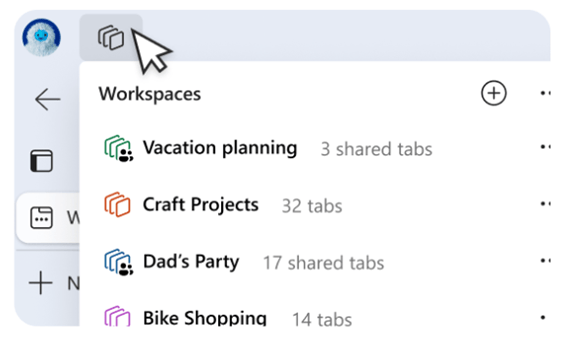
    Workspaces in Microsoft Edge represent a paradigm shift. A shift in how users organize and manage their online tasks. Imagine having a dedicated space for each project. One that seamlessly integrates relevant tabs, documents, and websites.

    Microsoft Edge Workspaces makes this a reality. It allows users to create custom workspaces. Each workspace represents different aspects of their digital lives. Whether you’re working on a project, planning a trip, or pursuing a hobby. Workspaces offer a tailored and organized browsing environment.

    Workspaces
    Image source: Microsoft

    Key Features of Microsoft Edge Workspaces

    1. Personalization: Users can customize Workspaces with a unique name and color. This makes it easier to distinguish between different projects or activities.
    2. Easy Access: With a single click, users can switch between Workspaces. This instantly transitions them between different sets of tabs and online resources. Users associate each Workspace with specific projects or interests.
    3. Persistence: Workspaces keep their configurations. This is the case even when users close and reopen the browser. This ensures that users can seamlessly resume their work. There is no need to reconstruct their customized environments each time.
    4. Efficient Task Management: Workspaces make task-focused browsing easier, minimizing distractions. This helps users maintain focus on the specific project or activity at hand.

    Enhanced Security with Edge Secure Network VPN

    Built-in VPN

    Microsoft Edge takes a giant leap in prioritizing user privacy and security. The Edge Secure Network uses a new built-in VPN. VPNs, or Virtual Private Networks, encrypt internet connections. This helps ensure a secure and private browsing experience. Microsoft Edge now provides users with 5GB of free VPN data per month. This further protects their online presence.

    Key Benefits of the VPN in Microsoft Edge

    1. Enhanced Privacy: VPNs mask users’ IP addresses. This makes it challenging for malicious actors to track their online activities. This is particularly crucial when accessing public Wi-Fi networks. As well as sensitive information.
    2. Secure Browsing: The VPN has an encrypted connection. This ensures that data transmitted between the user’s device and internet is secure. It reduces the risk of interception by hackers.
    3. Geographic Consistency: Edge’s VPN will mask your specific location. Websites will see a location similar to yours. So, when you look up movie times or nearby services, you see what you expect. You cannot choose a specific region to route traffic from.
    4. Complimentary 5GB Data: Microsoft Edge users receive 5GB of free VPN data each month. To conserve the data limit, content streaming sites aren’t routed through the VPN. These are sites like Netflix, Hulu, Disney+, etc.

    Other New Features Added to Microsoft Edge Browser

    Microsoft is continuously updating Edge. Here are a few more new features you can enjoy.

    1. Autofill for Forms: Edge makes filling out forms online easier. It will suggest completions when you start typing into fields. This includes name, email, address, etc.
    2. Web Capture: Using Web Capture in Edge makes it easy to take a screenshot. You can select an area or a full page. Then paste it into any of your files.
    3. Copilot: Use the Copilot icon at the top of Edge to access AI features. This includes creating AI-generated images as well as creating quick email drafts and more.
    4. Read Aloud: Need to step away from the screen for a moment? Let Edge read content for you out loud. Enabling you to multi-task like there’s no tomorrow!

    Get Help Exploring Your Microsoft Services

    Microsoft Edge establishes itself as a comprehensive solution. It’s great for those seeking a more productivity-focused browser. As well as a secure and private online environment. Microsoft Edge’s latest features enhance the way we work, explore, and connect.

    Is your company in need of help exploring what Microsoft has to offer? From Edge enhancements to Microsoft 365 tools, we have experts to guide you.

    Don’t miss out on all that these solutions have to offer. Our Microsoft experts can help set up, manage, and secure your digital workflows.

    Give us a call today to schedule a chat.

    —
    Featured Image Credit

    This Article has been Republished with Permission from The Technology Press.

  • A Call to Action: Addressing Governance and Fiscal Responsibility in Riverside

    In the upcoming Riverside City Council Meeting scheduled for April 9, 2024, items 28 and 29 in discussion and item 34 in closed session pose significant concerns for our community. It is crucial for the citizens of Riverside to voice their opposition to these proposals, highlighting the City Council’s past mismanagement and the urgent need for reform in hiring practices, salary settings, and contract terms for city staff. The City Council has not shown the ability to actually debate significant issues and challenge the self serving direction of staff recommendations.

    Historical Missteps and Financial Repercussions

    The track record of the Riverside City Council in managing staff appointments, terminations, and compensations has been troubling. A series of terminated City Managers and City Attorneys, followed by costly lawsuits, “golden parachutes,” and an unjustifiable drain on taxpayers’ funds, illustrates a pattern of poor decision-making. This history underscores the council’s inability to handle complex financial matters and staff contracts with the prudence expected by the citizens they serve.

    Salaries and Compensation: A Disconnect from Reality

    Moreover, the salaries and compensation packages for City Management and Staff far exceed those of comparable positions in the private sector within the Riverside area. This disparity is not only unjustifiable but unsustainable. It is essential to realign these salaries and eliminate term-specific employment contracts that lead to wasteful spending on severance packages. A shift toward at-will employment, coupled with rigorous performance and value assessments, is imperative.

    Impact on City Services and Fiscal Health

    The consequences of the City Council’s actions extend beyond mismanaged human resources. Riverside is currently grappling with failing basic city services, inadequate staff supervision, and a burgeoning financial deficit exacerbated by an unsustainable pension obligation. The decision to bring trash collection services in-house, serving special interests rather than the community’s well-being, further exemplifies the council’s role as a mere “rubber stamp” for staff proposals, neglecting the taxpayers’ best interests.

    The Urgent Need for Fiscal Prudence

    The backdrop of a pending lawsuit challenging the city’s stance on diversity, inclusion, and free speech rights, initiated by Representatives Matt Gaetz and Marjorie Taylor, adds another layer of financial strain. This situation, coupled with the city’s mismanagement of Covid relief funds and an overreliance on state and federal grants, underscores a dangerous disconnect from fiscal responsibility. Riverside’s leadership must adopt a mindset of living within its means, recognizing that every dollar spent comes from taxpayers who entrust their elected officials with the city’s fiscal health.

    A Call for Civic Engagement

    As Riverside stands at a crossroads, the importance of civic engagement cannot be overstated. The upcoming City Council Meeting on April 9 offers a pivotal opportunity for citizens to demand accountability, transparency, and a reevaluation of the city’s governance and fiscal management practices. By voicing opposition to items 28, 29, and 34, the community can take a stand against wasteful spending, advocate for the alignment of city staff compensation with local standards, and call for a governance approach that prioritizes the public interest over special interests.

    Conclusion

    The challenges facing Riverside require a collective effort to steer the city towards a sustainable and responsible future. It is time for the citizens of Riverside to demand better from their City Council, ensuring that the city’s leadership is marked not by a lust for power and personal gain, but by a commitment to serve the community with integrity, fiscal prudence, and a vision for a prosperous Riverside for all.

  • A Call for Alignment in Ward One’s Housing Vision

    Recent electoral outcomes in Ward One have prompted discussions among common sense voters about the future of housing and community development in the City of Riverside. These discussions are pivotal, reflecting broader state and national policy debates, especially those associated with figures like Governor Gavin Newsom and Congressman Mark Takano. The preference for policies akin to those seen in San Francisco among Ward One voters signals a community ethos that leans towards inclusivity and progressive urban planning. However, the rest of Riverside should not have to compromise their quality of life and home values simply because voters in Ward One prioritize emotional over pragmatic decision-making.

    THE DOWNTOWN PROJECT: A REFLECTION OF COMMUNITY VALUES

    In light of this, the conversation around the downtown project, notably The Mark, warrants attention. Initially envisioned as a premium apartment complex, its support of the status quo, backing Phil Falcone to carpetbag into Ward One, and actively supporting his campaign suggest it should transition into high-density, low-income housing. The remaining vacant space should be converted to homeless shelters and resources. This pivot could serve as a tangible manifestation of Ward One’s voiced preferences and the agenda supported by The Mark’s ownership and management.

    Moreover, incorporating spaces dedicated to homeless shelters within such developments could directly address critical social needs. It’s a proposition that not only aligns with Ward One’s progressive leanings but also responds to the acute housing challenges facing many Californians.

    ACCOUNTABILITY AND COMMUNITY ENGAGEMENT

    The involvement of local businesses such as The Mark, unions masquerading as associations, and public figures in electoral processes, as observed with Phil Falcone’s campaign, raises important questions about corporate responsibility and political involvement. Transparency and accountability, especially in how special interests intersect with public affairs, are crucial for maintaining public trust and ensuring that elected officials truly represent their constituents’ interests.

    RETHINKING CITY GOVERNANCE AND SPENDING

    As we embark on these transformative projects, scrutinizing city spending and governance structures is inevitable and necessary. While empowering staff and embracing innovative approaches in city management are commendable steps, they also necessitate rigorous oversight and a commitment to fiscal responsibility to ensure that Ward One’s aspirations do not lead to financial imprudence.

    A SHARED BURDEN OR COLLECTIVE INVESTMENT?

    Finally, I am suggesting that the cost of progressive policies should be borne solely by their proponents simplifies the complex dynamics of urban development and communal living. 

    IN CONCLUSION

    As Riverside, and particularly Ward One, navigates these changes, the dialogue around development, housing, and governance requires depth of empathy, a commitment to equity, and an unwavering focus on the common good—as understood by Ward One voters. It’s a time for reflection, recalibration, and, most importantly, unity in pursuit of a vision that serves all residents equitably. Ward One voted for Riverside to emulate San Francisco, but we should limit that agenda to the boundaries of Ward One. The rest of the City should not pay the price for continued emotional voting.

  • The Ethics Board of Riverside: A Call for Stronger Oversight

    In the realm of municipal governance, the cornerstone of public trust is built upon a foundation of transparency and accountability. It is the expectation, not the exception, that our public officials adhere to the highest ethical standards. As the City of Riverside stands at a crossroads with the proposed amendments to the Riverside Municipal Code (RMC), the community’s commitment to these values is being put to the test.

    The Vital Role of the Ethics Board

    The Board of Ethics in Riverside plays a pivotal role in ensuring that our city’s officials are held to these standards. Tasked with advising and making recommendations on all matters related to the Code of Ethics and Conduct (Chapter 2.78 of the RMC), this body is instrumental in fostering an environment where ethical behavior is not just encouraged but expected. Its duties, as outlined in RMC Section 2.80.020, underscore the significance of its mission—to guide the City Council on adopting, revising, and enforcing ethical standards.

    A Personal Journey Towards Ethical Governance in Riverside

    During my tenure of over eight years on the Riverside Ethics Board, many of those as chair, I tirelessly advocated for an Ethics process that genuinely upheld integrity rather than merely serving as a protective veil for elected officials. This experience afforded me an intimate view of the systemic challenges that plague our city’s approach to ethical oversight.

    The Quest for Effective Ethics Oversight

    Riverside’s struggle with ethical governance is not new. The city’s leadership often lacks the maturity needed to prevent violations by council members, the mayor, and city staff. Instead, the focus has historically been on restricting public discourse and shielding officials from accountability. This misguided approach not only undermines public trust but also diminishes the city’s potential for transparent and responsible governance.

    A Call for Independence and Transparency

    An incident that starkly highlighted the need for reform was the case against Condor, as advised by an independent counsel hired by the City Attorney. The conclusion was unequivocal: for the Ethics Board to be seen as legitimate and effective, it must operate independently of City Council oversight. This recommendation aligns with my longstanding belief that true ethical oversight requires autonomy.

    Unpacking the Current Proposal

    Recently, Member Foreman brought forward a proposal that seeks to amend RMC 2.78.060(M), focusing on violations of laws by public officials. This amendment is two-pronged: firstly, it proposes a revision of language to clarify what constitutes a violation of federal, state, or local laws. Secondly, it recommends that the Governmental Processes Committee review these amendments before they are presented to the City Council.

    Critique of the Proposed Amendments

    Dilution of Oversight Capabilities

    A critical analysis reveals a concerning prospect: the proposed amendments might weaken the Board’s oversight capabilities rather than fortify them. By redefining what constitutes a violation, there is a risk of creating loopholes that could allow unethical behavior to go unchecked. Such a change could significantly impair the Board’s ability to enforce ethical standards effectively, thereby reducing public officials’ accountability.

    Impact on Transparency and Accountability

    Moreover, the procedural changes implied in the proposal could lead to reduced transparency and accountability in the ethical review process. If the process becomes more convoluted or less accessible to the public eye, the community’s ability to hold its officials accountable could be significantly hampered. It’s crucial that any amendments serve to enhance, not obscure, the workings of the Ethics Board.

    A Path Forward: Strengthening, Not Weakening, Oversight

    As Riverside navigates these proposed changes, it is imperative that we prioritize the strengthening of our ethical oversight mechanisms. This entails crafting amendments that:

    • Provide clear, unambiguous language that closes, not opens, potential loopholes for unethical behavior.
    • Ensure the amendment process is transparent, involving ample public participation and scrutiny.
    • Establish independent mechanisms for the review and investigation of ethics complaints, guaranteeing that the Board can operate without undue influence.


    Incorporating your extensive experience on the Ethics Board and your insights into the challenges faced by the city of Riverside adds depth and a personal touch to the narrative. Here’s how you could elaborate on these points within the context of the blog post:


    A Personal Journey Towards Ethical Governance in Riverside

    During my tenure of over eight years on the Riverside Ethics Board, many of those as chair, I tirelessly advocated for an Ethics process that genuinely upheld integrity rather than merely serving as a protective veil for elected officials. This experience afforded me an intimate view of the systemic challenges that plague our city’s approach to ethical oversight.

    The Quest for Effective Ethics Oversight

    Riverside’s struggle with ethical governance is not new. The city’s leadership often lacks the maturity needed to prevent violations by council members, the mayor, and city staff. Instead, the focus has historically been on restricting public discourse and shielding officials from accountability. This misguided approach not only undermines public trust but also diminishes the city’s potential for transparent and responsible governance.

    A Call for Independence and Transparency

    An incident that starkly highlighted the need for reform was the case against Condor, as advised by an independent counsel hired by the City Attorney. The conclusion was unequivocal: for the Ethics Board to be seen as legitimate and effective, it must operate independently of City Council oversight. This recommendation aligns with my longstanding belief that true ethical oversight requires autonomy.

    Proposing a New Framework for Ethical Oversight

    Based on these experiences and insights, I propose a fundamental restructuring of Riverside’s Ethics Board to ensure its independence and efficacy:

    • Divorce from Council Oversight: The Ethics Board should operate independently of the City Council. This separation is crucial for ensuring decisions are made without political influence or bias.
    • Appointment by Local Neighborhood Associations: To reflect the community’s diverse interests and ensure broad representation, members of the Ethics Board should be appointed by local neighborhood associations rather than elected officials.
    • Empowerment with Subpoena Power and Independent Counsel: The Board should have subpoena power to effectively gather evidence and an independent legal counsel to navigate complex ethical issues without conflict of interest.
    • Proactive Investigations: The ability to initiate investigations without a formal complaint is essential. This proactive approach allows the Board to address unethical behavior more comprehensively, rather than being reactive and limited by the submission of formal complaints.
    • Expanded Oversight Responsibilities: The Ethics Board should oversee a broader range of ethical concerns, including the examination of hiring practices that violate position requirements, the misuse of city offices and staff time for campaigning, and other forms of unethical behavior that are prevalent in city hall.

    Upholding Public Trust Through Ethical Governance

    The integrity of our city’s governance is reflected in the strength of its ethical oversight. As such, the proposed amendments to the Riverside Municipal Code should be approached with caution and deliberation. The goal must be to uphold, not undermine, the pillars of transparency and accountability that support public trust. Let us call upon our city leaders and the Board of Ethics to ensure that any changes to the ethical governance framework serve the public interest, fortifying the commitment to ethical conduct that Riverside’s residents deserve.

    A Vision for a Truly Ethical Riverside

    My years on the Ethics Board have taught me that effective ethical oversight is not just about enforcing rules but fostering a culture of integrity and accountability. By restructuring the Ethics Board to operate with genuine independence and granting it the powers necessary to investigate and address ethical violations proactively, Riverside can become a model for transparent and ethical governance. This vision for an ethics-based city, where decisions are made in the public’s interest and officials are held to the highest standards of conduct, is not only necessary but achievable with the collective will and commitment of our community.